Budget 90 minutes if you want a brisk pass through the major galleries, and 2–3 hours if you plan to stop at the quiz stations, watch at least one Noh or taiko sequence, and use the Audioguide. The museum is compact, but the interactives slow you down in a good way.
Quick Information
ADDRESS
Auguststraße 68, 10117 Berlin, Germany
RECOMMENDED DURATION
2 hours
Timings
11:00–19:00
TICKETS
From $21.40
Did you know?
Samurai Museum Berlin is a private museum, not a state institution like many of Berlin’s better-known museums.
The exhibition route is arranged as a one-way path through themed rooms, so visitors follow a set storyline rather than moving randomly between cases.
Most visitors report spending about one to two hours inside, which is shorter than many major Berlin museum visits.
Is the Samurai Museum Berlin worth visiting?
The first thing you notice is the contrast: lacquered armor and blade-polished steel in dark galleries, then a screen flickers to life with a Noh actor, a tea ceremony, or a fox spirit leading you onward. It feels closer to stepping into a story world than walking through a conventional museum.
That is deliberate. The museum was created to make a private collection of authentic samurai objects legible to modern visitors, using digital staging to connect weapons, ritual, theater, and daily life instead of isolating them in glass cases.
The payoff is that you leave with a fuller picture of the samurai than most people carry in: not just warriors, but patrons of ceremony, costume, discipline, and performance. Few Berlin museums let you move this easily between scholarship and play.
Skip it if you dislike screen-based interactives or want a major encyclopedic museum with hours of galleries.
What to see at the Samurai Museum Berlin?

1/7
Introduction gallery
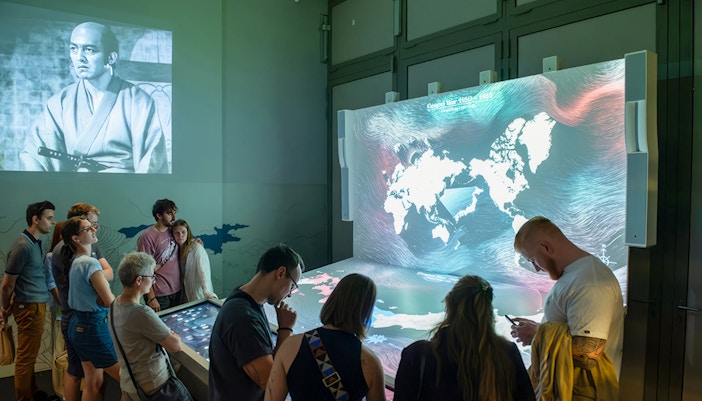
Start with the museum’s orientation displays, where touchscreens, gigapixel images, and short explanations help you read armor, swords, and crests before the denser galleries. This makes the rest of the visit much easier to follow.
Matsudaira clan armor
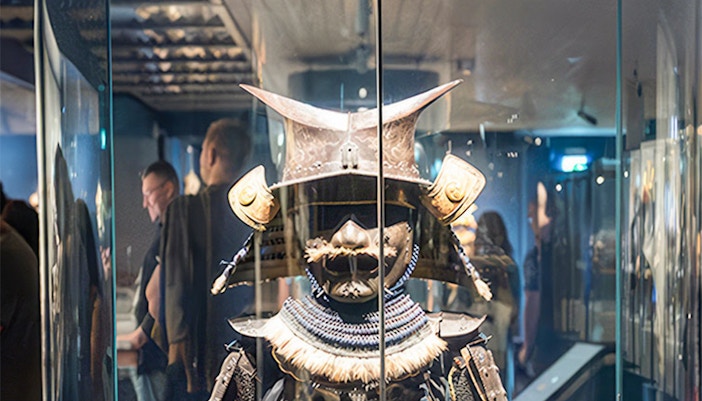
The 17th-century armor linked to the Matsudaira clan is the object most visitors linger over. Look closely at the helmet crest, face mask, and silk lacing; it shows how rank, craftsmanship, and intimidation worked together.
Sword and mask displays
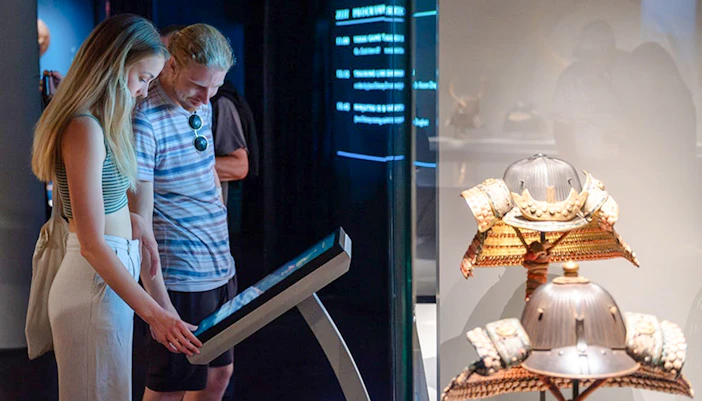
These cases move beyond the idea of the samurai sword as a single icon. You’ll see blades, fittings, masks, and protective gear up close, with digital tools that reveal details easy to miss from the glass.
Edo-period palanquin
The original palanquin is one of the museum’s more surprising objects. It shifts the story from battle to movement, status, and daily life, showing how elite samurai traveled through the outside world they controlled.
Noh theater installation
The reconstructed stage comes alive with holographic performance excerpts roughly every 30 minutes. Time your route to catch one live; it gives the masks and costume displays around it far more emotional weight.
Tea house and ceremony
This quieter room shows the disciplined, ceremonial side of samurai culture. The holographic tea ceremony slows the pace of your visit, and many people spend longer here than they expected after the louder digital exhibits.
Kitsune interactive quest
Families should save time for the fox-guided quiz trail across 61 stations. It turns the museum into a scavenger hunt, and children who might rush past text panels usually stay engaged much longer here.
How to explore the Samurai Museum Berlin
Start with the main object galleries first, while your attention is freshest, then move into the immersive installations. That order works because the armor, swords, masks, and daily-life objects give the later holographic theater and tea ceremony more meaning. End with the Kitsune stations if you’re visiting with children; they’re easier to enjoy once you know the stories behind the objects.
Must-see: the Matsudaira clan armor, the reconstructed Noh stage, and the tea house installation. Optional: the full Kitsune quest and deep touchscreen reading, which add 30–45 minutes and are best if you enjoy gamified learning.
Guided vs self-paced: Self-paced works well because the galleries are clearly sequenced, but context matters: clan crests, sword fittings, and Noh references are easy to skim past without narration, so the Berlin Samurai Museum tickets pair especially well with an Audioguide.
History of Samurai Museum Berlin
- 8th–19th centuries: Many of the armor sets, swords, masks, tea utensils, and artworks now on display were originally made across Japan’s samurai era.
- Over decades: Collector Peter Janssen assembled one of the world’s largest private holdings of authentic samurai objects, eventually totaling nearly 4,000 pieces.
- 2022: The Samurai Museum Berlin opens in Berlin-Mitte, presenting more than 1,000 artifacts through interactive, technology-led displays.
- 2026: The museum is nominated for European Museum of the Year, reflecting how quickly it established a reputation beyond Berlin.
Architecture of the Samurai Museum Berlin
- Spatial mood: Contemporary exhibition design with darkened rooms and focused lighting creates a theatrical shift from busy Auguststraße into a slower, more concentrated interior.
- Materials: Glass vitrines, timber elements, projection surfaces, and matte black finishes keep your eye on lacquered armor, polished blades, and textiles rather than the shell of the building.
- Immersive staging: The reconstructed Noh stage and tea house are the structural anchors, turning performance and ritual into spaces you experience visually, not just objects you read about.
- On the ground: The galleries alternate between quiet artifact viewing and screen-led bursts of sound, which keeps the visit from feeling like a long row of cases.
- Design authorship: No single star architect defines the experience; the museum’s vision lies in curatorial design that uses technology to make a private samurai collection legible to a broad public.
Who built the Samurai Museum Berlin?
Samurai Museum Berlin grew from collector Peter Janssen’s long pursuit of authentic samurai objects. The museum’s central idea was not simply to display them, but to translate Japanese warrior culture for a Berlin audience through close viewing, multimedia staging, and narrative context that makes armor, theater, and ritual speak to first-timers.
Why Berlin is a fitting home for a samurai museum
Samurai Museum Berlin works because Berlin already rewards niche, idea-driven museums. In a city better known for Cold War history, archaeology, and European painting, this collection gives you a sharp change of lens: power, ritual, craftsmanship, and performance seen through Japan rather than Europe. That contrast is part of the appeal. You are not just learning about samurai objects; you are seeing how strongly they resonate far from their place of origin. The museum’s success, awards attention, and multilingual interpretation show that this subject travels surprisingly well.
Book your tickets to Samurai Museum Berlin
Frequently asked questions about the Samurai Museum Berlin
Yes, especially if you want a Berlin museum that feels more immersive than traditional. The combination of authentic armor and digital theater makes it easy to recommend for first-timers. See Berlin Samurai Museum Tickets for current entry options.
Most visits take about 2 hours. You can do a focused circuit in 90 minutes, but 2.5–3 hours is more realistic if you plan to watch a performance loop, use the Audioguide, and complete the interactive stations. See Berlin Samurai Museum Timings for more info.
Don’t miss the Matsudaira clan armor, the reconstructed Noh stage, and the tea house installation. If you’re visiting with children, add the Kitsune quest; it turns the galleries into a game without flattening the history. See the complete guide to visit Samurai Museum Berlin.
Yes. It’s one of the easier specialist museums in Berlin for first-timers because the screens, quizzes, and short performance loops break up the history. Children usually engage best from about age 6 upward, with adult supervision. Plan your visit to the Samurai Museum Berlin.
Usually, yes. The museum uses timed entry, and advance booking can be cheaper than buying at the door. Booking ahead also helps if you’re fitting it between other Mitte stops. Check Berlin Samurai Museum Tickets before you go.
Yes. Almost the entire museum is step-free, with elevator access between levels and accessible restrooms on-site. It’s a straightforward visit for most mobility needs, though one small upper-level installation offers more limited access.