Plan your visit to Samurai Museum Berlin
Samurai Museum Berlin is an immersive museum in Berlin-Mitte best known for pairing authentic samurai armor, weapons, and art with digital installations and interactive storytelling. The museum itself isn’t huge, but it rewards timing and attention more than people expect, especially if you want to catch the 30-minute holographic performances and still leave time for the 61 interactive stations. A good visit is less about rushing from room to room and more about pacing the shows, quiz trail, and artifact displays. This guide helps you do exactly that.
Quick overview: Samurai Museum Berlin at a glance
If you want the short version before you book, here’s what will actually shape your visit.
- When to visit: Daily, with timed entry throughout the day. Weekday mornings are noticeably calmer than Saturday and holiday afternoons, because families tend to spend longer at the 61 quiz stations and cluster around the 30-minute performance cycle.
- Getting in: From €10 for standard entry. Guided tour from €15. Advance booking matters if you want the cheapest slots, while last-minute and flexible tickets rise toward the top end of the price range.
- How long to allow: 2–3 hours for most visitors. It stretches toward the longer end if you follow the Kitsune quest, use the audio guide, and stay for both the Noh theater and tea-house installations.
- What most people miss: The Edo-period palanquin and the tea utensils linked to Sen no Rikyu are easy to rush past after the armor displays, even though they add real depth to the samurai story.
- Is a guide worth it? Yes, if you want the symbolism and context behind clans, ceremony, and performance traditions; otherwise, the 20-language audio guide gives you plenty for less.
Jump to what you need
🕒 Where and when to go
🎟️ Which ticket is right for you?
🗺️ Getting around
🗡️ What to see
♿ Facilities and accessibility
Where and when to go
How do you get to Samurai Museum Berlin?
The museum sits on Auguststraße in Berlin-Mitte, a short walk from Oranienburger Straße and easy to slot into a Museum Island or Hackescher Markt day.
Auguststraße 68, 10117 Berlin, Germany
- S-Bahn: Oranienburger Straße (S1, S2, S25) → 3-min walk → Exit toward Auguststraße for the shortest approach.
- Subway: Oranienburger Tor (U6) → 4-min walk → Head south toward Tucholskystraße, then cut across to Auguststraße.
- Tram: M1 or M5 to Oranienburger Tor → 4-min walk → Useful if you’re coming from central Mitte or Alexanderplatz.
- Taxi/rideshare: Drop-off on Auguststraße or Tucholskystraße → 1–2 min walk → Best if you’re arriving with kids or limited time.
Which entrance should you use?
The museum uses one main entrance on Auguststraße, but the biggest mistake is showing up without the right ticket line in mind. Pre-booked timed-entry visitors move through faster, while on-site buyers slow down around busy family periods.
- Pre-booked tickets: For visitors with a QR code. Expect 5–10 min waits during weekend afternoons.
- On-the-day tickets: For walk-up visitors and flexible entries. Expect 15–25 min waits during weekends and school breaks.
When is Samurai Museum Berlin open?
- Monday–Sunday: 11am–7pm
- Last entry: 6pm
When is it busiest? Saturday and Sunday from 1pm–4pm, plus school-holiday afternoons, feel busiest because families linger at the interactive stations and then bunch around the 30-minute performances.
When should you actually go? Aim for a weekday morning slot so you can move through the armor galleries more easily and catch the first performance rooms before the museum fills out.
Which Samurai Museum Berlin ticket is best for you
| Ticket type | What's included | Best for | Price range |
|---|---|---|---|
Berlin Samurai Museum Tickets | Entry to the Samurai Museum Berlin + access to interactive exhibits, samurai artifacts, digital installations, and live cultural performances | A museum visit where you want immersive storytelling, authentic samurai history, and interactive exhibits that feel more engaging than a traditional gallery walkthrough | From €19 |
How do you get around Samurai Museum Berlin?
Museum layout
The museum is spread across 2 levels and works best as a compact, story-led route rather than a room-by-room checklist. It’s easy to self-navigate, but the performance cycle and interactive stations can make you backtrack if you don’t pace them.
- Main artifact galleries: Armor, swords, and core samurai history displays → budget 35–45 min.
- Performance spaces: Holographic Noh theater and tea-house installations → budget 20–30 min, especially if you wait for the next cycle.
- Upper-level displays: Daily-life objects, deeper interpretation, and interactive stations → budget 35–45 min.
- Kitsune trail stops: Quiz and game stations spread throughout both levels → add 20–40 min if you want to complete them properly.
Suggested route: Start with the core armor and weapons displays, then time your move into the performance rooms before heading upstairs for the palanquin and interactive stations; most visitors lose time by drifting into the quizzes too early and then circling back for the shows.
Maps and navigation tools
- Map: The museum is compact enough to do without a formal map, but reception staff can help you time your route around the 30-minute performance rhythm.
- Signage: English and German labels are strong, and the object-by-object interpretation is clear enough for a self-guided visit.
- Audio guide/app: The audio guide is available in 20 languages for €3.50, and it adds the most value in the armor, tea, and theater sections where symbolism matters.
💡 Pro tip: Don’t wander into the interactive stations first if you care about the performance rooms. It’s easy to lose 20 minutes there and then arrive just after a Noh cycle ends.
Where are the masterpieces inside Samurai Museum Berlin?

Matsudaira clan armor
Period/clan: 17th century, Matsudaira clan
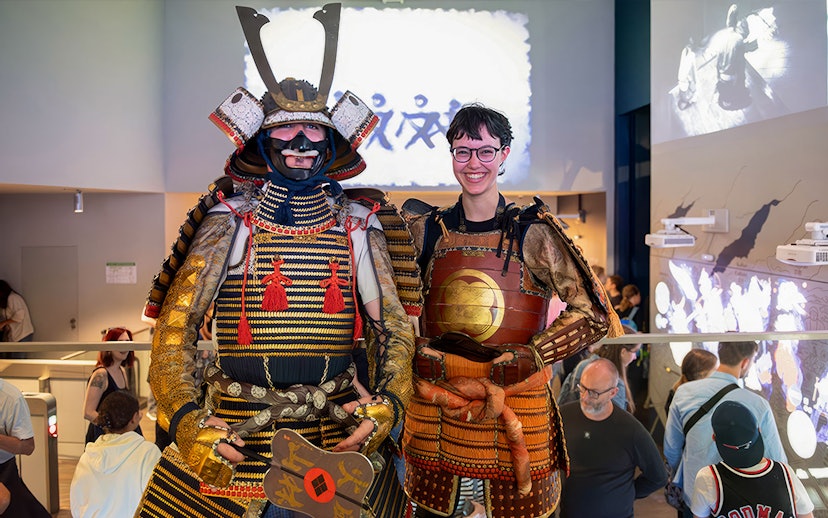
This is one of the collection’s strongest first impressions: a full suit of samurai armor with the weight, polish, and ceremonial detail that most visitors picture when they think of elite warrior culture. What makes it worth slowing down for is the craftsmanship in the lacing, helmet crest, and face mask, which turns it from a military object into a status symbol. Many people notice the silhouette first and miss how decorative the protection itself is.
Where to find it: In the main armor displays near the start of the museum route.
Edo-period samurai palanquin
Era: 18th century, Edo period
The palanquin is one of the most quietly revealing objects in the museum because it shifts the story away from battle and toward rank, travel, and daily elite life. It’s easy to walk past after the more dramatic armor rooms, but that would be a mistake since few collections show this side of samurai culture so concretely. Look closely at the lacquer and carved detailing, which signal status as much as function.
Where to find it: In the upper-level displays, after the main weapons and armor sequence.
Holographic Noh theater
Art form: Noh performance installation
This is one of the clearest examples of how the museum uses technology well instead of just using it loudly. The darkened room, projected performance, and original masks nearby help you connect samurai culture to ritual and high art, not just warfare. Most visitors focus on the projection itself and miss the way the surrounding objects explain why Noh mattered to elite warrior circles.
Where to find it: In the immersive theater gallery along the central route.
Tea house and ceremony installation
Cultural practice: Tea ceremony and Zen-influenced court culture
The reconstructed tea-house space adds a different kind of gravity to the visit. Instead of power, it shows discipline, refinement, and controlled ritual. All central to the samurai world the museum is trying to widen beyond armor and swords. People often move through it too quickly because it feels quieter than the performance room next door, but the utensils and choreography are where the exhibit really lands.
Where to find it: In the gallery adjoining the immersive performance spaces.
Kitsune interactive quest
Format: Digital family trail and quiz experience
This is the museum’s smartest family feature, but it’s not only for children. Following Kitsune through the galleries turns the collection into a scavenger-hunt-style route, and the questions actually reinforce what you’re seeing rather than distracting from it. Many adults treat it as optional background and then realize late in the visit that it’s one of the best ways to pace the museum.
Where to find it: Across both levels at the interactive stations marked throughout the route.
Facilities and accessibility
- 🎒 Cloakroom/lockers: Lockers and a cloakroom are available, and large bags plus strollers should be stored before entering the exhibition spaces.
- 🚻 Restrooms: Restrooms are on-site, including accessible facilities, so you don’t need to leave the museum during your visit.
- 🛍️ Gift shop/merchandise: The exit shop is a worthwhile final stop for books, replica items, and samurai-themed souvenirs that are better than generic museum postcards.
- 🪑 Seating/rest areas: Benches in parts of the route make it easier to pause between the darker immersive rooms and the more text-heavy artifact displays.
- ♿ Mobility: The museum is 98% wheelchair accessible, with step-free access across the main route, elevator access between levels, and accessible restrooms; only one small upper-level installation is less straightforward.
- 👁️ Visual impairments: Large-print labels and audio-based interpretation help a lot here, especially if you use the multi-language audio guide for object context.
- 🧠 Cognitive and sensory needs: Weekday mornings are the calmest window, while darker rooms, projection effects, and sound in the immersive galleries may feel intense if you’re sensitive to sensory input.
- 👨👩👧 Families and strollers: Families are well catered to overall, but the museum is not stroller-friendly end to end because strollers need to be left in the cloakroom before entry.
Samurai Museum Berlin works well for school-age children because it gives them something to do, not just something to look at.
- 🕐 Time: 90 min to 2 hours is realistic with younger children, and the Kitsune stations plus the armor gallery are the best sections to prioritize.
- 🏠 Facilities: Lockers, benches, accessible restrooms, and a compact 2-level layout make this easier to manage than a larger all-day museum visit.
- 💡 Engagement: Start the Kitsune trail early, because children stay much more focused when they feel they’re solving the museum instead of simply following adults around it.
- 🎒 Logistics: Bring a small bag, arrive a little before your slot, and skip bulky strollers because they’ll need to be stored before you enter.
- 📍 After your visit: Hackescher Markt is a short walk away if you want an easy snack stop and a change of pace after the galleries.
Rules and restrictions
What you need to know before you go
- Entry requirement: Book a timed-entry ticket if you want the lowest price, keep your QR code ready for scanning, and bring proof if you’re using a reduced ticket.
- Bag policy: Large bags and strollers should be left in the lockers or cloakroom before you enter the exhibition areas.
- Re-entry policy: Plan the museum as one continuous visit around your timed entry window, because it works best when you’ve eaten, stored bags, and then gone straight through.
Not allowed
- 🚫 Food and drink: Keep food and open drinks out of the galleries so the displays and interactive stations stay protected.
- 🖐️ Touching exhibits: Don’t touch the original armor, weapons, masks, or display objects, because many are rare historic pieces with delicate surfaces.
Photography
Personal photography is generally fine and the museum is very photo-friendly, but keep flash off around the artifacts and immersive rooms. The practical line here is preservation and space: quick personal photos work well, while anything that changes lighting or turns a narrow room into a photo setup is a bad fit for this museum.
Good to know
- Performance timing: The holographic rooms work on a 30-minute rhythm, so a poorly timed start can mean waiting around or missing one of the strongest parts of the visit.
- Pacing: The museum is compact, but the 61 interactive stations can stretch a quick visit into a much longer one if you try to complete every challenge.
Practical tips
- Booking and arrival: Book ahead if price matters, because timed-entry tickets start around €10 while flexible or last-minute entry can rise toward €19.
- Pacing: Don’t burn all your attention in the first armor rooms; save some time for the tea-house and Noh spaces, which add the cultural context people often realize they wanted only at the end.
- Crowd management: Weekday mornings are the sweet spot here, because the museum feels far more spacious before family groups build up around the interactive stations and performance cycle.
- What to bring or leave behind: Pack light, since large bags and strollers need to be left in the lockers or cloakroom, and carrying a smaller bag makes arrival much smoother.
- Audio guide strategy: The €3.50 audio guide is most worth it if you care about symbolism, clan history, and ceremony; if you mainly want the atmosphere and big visual moments, you can skip it.
- Food and drink: This is better treated as a continuous museum stop followed by a meal nearby, because Auguststraße and the Hackescher Markt area give you stronger café options than trying to build a lunch break into the visit.
- Family pacing: If you’re with children, do the Kitsune trail from the start instead of saving it for later. Once kids see the interactive stations, it’s much harder to pull them back to the text-based displays.
What else is worth visiting nearby?
Commonly paired
Museum Island
Distance: 900 m, a 12 minute walk
Why people combine them: It keeps your day museum-focused without repeating the same experience. Samurai Museum Berlin is compact and immersive, while Museum Island gives you the broader heavyweight collections.
Commonly paired
Berlin Cathedral
Distance: 1.3 km, a 18 minute walk
Why people combine them: It’s an easy next stop if you want to stay in the same central sightseeing zone and add a Berlin landmark after an indoor cultural visit.
Also nearby
Hackesche Hoefe
Distance: 500 m, a 7 minute walk
Worth knowing: This is the easiest nearby stop for coffee, a lighter browse, or a reset after the darker museum galleries.
Monbijou Park
Distance: 850 m, a 12 minute walk
Worth knowing: It’s a good decompression stop if you’re visiting with children or simply want some open air before moving on to the next museum or landmark.
Eat, shop and stay near Samurai Museum Berlin
- On-site: Food isn’t the reason to come here, so plan your meal around the museum rather than inside it. Auguststrasse and nearby streets are the better bet.
- Father Carpenter (12-min walk, Münzstrasse 21-23, 10178 Berlin): Brunch and coffee in a courtyard setting, and one of the easiest post-museum stops if you want something relaxed rather than rushed.
- Distrikt Coffee (14-min walk, Bergstrasse 68, 10115 Berlin): Strong coffee, breakfast plates, and a reliable option if you’ve booked an earlier slot and want a proper meal afterward.
- House of Small Wonder Berlin (11-min walk, Johannisstrasse 20, 10117 Berlin): A good fit if you want a more atmospheric sit-down break that still feels on-theme after a Japan-focused museum visit.
- 💡 Pro tip: Book an early slot and eat afterward because the museum flows better as one uninterrupted visit, and nearby cafes are calmer before the main lunch rush or after 2pm.
- Samurai Museum gift shop: Books, replica items, and themed souvenirs at the exit, making it the most direct place to buy something that actually connects to what you just saw.
- Hackesche Hoefe boutiques: Design shops, small Berlin labels, and courtyard browsing a short walk away if you want to turn the museum stop into a wider Mitte afternoon.
Yes, if you’re on a short Berlin trip, Mitte makes life easy. You can walk to major sights, move quickly by subway or S-Bahn, and fit Samurai Museum Berlin into a day without much transit friction. The trade-off is price: this is one of the city’s more convenient and more expensive bases.
- Price point: Central Mitte usually skews mid-range to upscale, though you’ll still find smaller hotels and serviced apartments if you book early.
- Best for: Short stays, first-time Berlin visitors, and anyone who wants the museum, Museum Island, and Hackescher Markt all within easy reach.
- Consider instead: Prenzlauer Berg for a quieter neighborhood feel and better value over longer stays, or Friedrichshain if you want more nightlife and don’t mind a slightly longer ride back to the museum district.
Frequently asked questions about visiting Samurai Museum Berlin
Most visits take around 2 hours, though 2.5–3 hours is more realistic if you follow the full Kitsune quest, use the audio guide, and wait for multiple holographic performances. It’s a compact museum, but the interactive stations slow people down more than the floor area suggests.
No, but booking ahead usually gets you the best price and the smoothest arrival. Standard timed-entry tickets start around €10 when booked in advance, while flexible or last-minute entry can rise toward €19, so waiting rarely helps unless you need spontaneity more than savings.
Aim to arrive about 10–15 minutes early. That gives you enough time to store larger bags, get your QR code ready, and walk in without turning the first few minutes of the visit into a rushed check-in.
Yes, but keep it small if you can. Large bags and strollers should be left in the lockers or cloakroom before you enter the exhibition spaces, so traveling light makes the start of the visit much easier.
Yes, personal photography is generally allowed. Flash is the main thing to avoid around the artifacts and immersive rooms, and it’s best to keep photos quick so you don’t block performance spaces or interactive stations.
Yes, and the museum is well set up for it. Groups of 10 or more can book group rates, school groups have their own discounted pricing, and the collection works well for guided visits because the route is compact and the key stories are easy to structure.
Yes, especially for children old enough to follow the Kitsune quest and interact with the quiz stations. The museum is one of the more family-friendly cultural attractions in central Berlin because it mixes real artifacts with screens, games, and shorter sections that hold attention well.
Yes, almost all of it is. The museum is 98% wheelchair accessible, with step-free access through the main route, elevator access between the 2 levels, and accessible restrooms, though one small upper-level installation is less straightforward.
Food is much better near the museum than built into it. Auguststraße, Hackescher Markt, and the surrounding Mitte streets give you plenty of coffee, brunch, and lunch options within a 7–15 minute walk, which is why most people eat before or after rather than during the visit.
Yes, if you want more than the visual impact of the collection. At €3.50, the audio guide is a good upgrade for visitors who care about symbolism, clan stories, tea culture, and the context behind the artifacts rather than just the objects themselves.
The audio guide is available in 20 languages. That makes it especially useful for international visitors, and it’s one of the museum’s stronger practical advantages because the collection is detailed enough that good interpretation genuinely improves the visit.
Weekday mornings are the easiest time to visit if you want more space and better sightlines. Weekend and holiday afternoons get busier because family groups spend longer at the interactive stations and the 30-minute performance cycle pulls people into the same rooms at once.