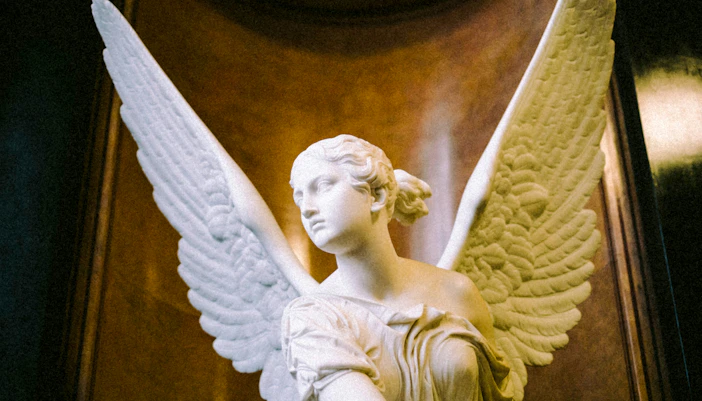
The Golden Madonna, or Virgin of Mercy, is a medieval wooden sculpture that is also one of the oldest surviving sculptures in Berlin. Due to its age, it is an object of significant cultural and historical value and symbolizes the city's rich artistic heritage.
The Menzel Room
For admirers of German Realist painter Adolph von Menzel, the Menzel Room is a must-see. This special gallery showcases an extensive collection of his paintings and drawings, offering a fascinating glimpse into his extraordinary talent and artistic vision. Some of the iconic artwork you’ll see here include The Balcony Room' (1845) and 'Iron Rolling Mill' (1875).
Caspar David Friedrich’s ‘The Monk by the Sea’
A masterpiece of Romanticism, this painting captures the haunting beauty of solitude and nature.
Claude Monet’s ‘The Houses of Parliament’

A brilliant example of Impressionism, Monet’s series portrays the changing light over London’s iconic landmark.
Édouard Manet's ‘The Execution of Emperor Maximilian’
A powerful and dramatic depiction of a historical event, this painting showcases Manet's bold use of composition and color.
Max Liebermann’s ‘The Flax Barn’
A stunning example of German Impressionism, this painting beautifully captures the rural landscape with a sense of light and texture.
A brief history of the Alte Nationalgalerie
The Alte Nationalgalerie, located on Berlin's Museum Island, opened in 1876 to display the Prussian royal family's art collection. Designed by architect Friedrich August Stüler, the neoclassical building features a grand portico and is renowned for its impressive façade. The gallery's collection spans over a century of European art, showcasing masterpieces by Caspar David Friedrich, Adolph Menzel, and Claude Monet. Over the years, the museum has expanded and evolved, becoming a central institution in Berlin’s cultural landscape.
During World War II, the building was severely damaged, and its artworks were evacuated to ensure their preservation. Following extensive repairs, the Alte Nationalgalerie reopened to the public in 1969, continuing its mission to celebrate the richness of European art. Today, it holds a significant place in the city's artistic heritage, offering visitors an extraordinary journey through art history, from Romanticism to Impressionism and beyond.
Permanent exhibitions to look out for
The Alte Nationalgalerie in Berlin offers a rich array of permanent exhibitions that showcase the evolution of 19th-century art. Here are some highlights:
Art of the 19th century
This extensive collection spans the Neoclassicist, Romanticist, Impressionist, and Secessionist art movements, featuring over 200 paintings, sculptures, and graphic works by approximately 80 artists.
Secessions: Klimt, Stuck, Liebermann
This exhibition compares the art scenes of Munich, Vienna, and Berlin at the turn of the 20th century, highlighting works by Gustav Klimt, Franz von Stuck, and Max Liebermann.
Ideal and Form: 19th-century sculpture
Housed in the Friedrichswerdersche Kirche, this exhibition presents sculptures from the era of Karl Friedrich Schinkel to the German Empire, offering a unique experience in a historic architectural setting.
Alte Nationalgalerie architecture
The Alte Nationalgalerie (Old National Gallery) in Berlin is an iconic example of neoclassical architecture, designed by the renowned architect Friedrich August Stüler. Built between 1866 and 1876, the gallery was commissioned by King Friedrich Wilhelm IV of Prussia as part of his vision to establish Berlin as a cultural hub. Stüler, a prominent architect of the time, integrated classical elements with a grand design to reflect the museum’s purpose of showcasing fine art. The building’s striking façade features a colonnade of Corinthian columns, while its central section is crowned with a large dome, creating a sense of both monumentality and openness. The gallery’s interior is just as impressive, with spacious halls and a layout that emphasizes the artwork on display. The Alte Nationalgalerie stands as a testament to 19th-century architectural ambition, blending classical forms with modern functionality to house a world-class collection of art.
Frequently asked questions about the Alte Nationalgalerie
The Alte Nationalgalerie showcases 19th-century artworks, featuring paintings and sculptures shaped by movements like Neoclassicism, Romanticism, and Modernism.
The Alte Nationalgalerie in Berlin showcases masterpieces like Adolph Menzel’s The Balcony Room and Iron Rolling Mill, Johann Gottfried Schadow’s Double Statue of the Princesses Luise and Friederike of Prussia, and Caspar David Friedrich’s Monk by the Sea.
The National Gallery Berlin, built between 1866 and 1876, is over 145 years old.
Yes, the gallery is open throughout the year, though it may have special closures or hours during holidays or for maintenance. It's recommended to check the gallery’s website for up-to-date information.
Yes, the museum is wheelchair accessible. There are ramps and elevators for easier access. It’s best to contact the museum in advance to arrange special services.
Designed in a neoclassical style by Friedrich August Stüler, the building is celebrated for its grand portico and columns, which reflect the architectural trends of the 19th century.
Did you know?
Opened in 1830, the Altes Museum was designed solely for fine art and antiquities, while natural history and ethnographic artifacts were placed elsewhere. This separation reflected Enlightenment-era ideals, which sought to separate ‘high culture’ from the study of nature and anthropology.
Before opening to the public, the Altes Museum housed the Prussian royal collection, featuring Greek and Roman antiquities acquired through diplomacy, purchases, and military campaigns. Some artifacts were taken from Napoleon’s seized collections after Prussia’s wars against France.
The grand rotunda, inspired by Rome’s Pantheon, was designed as more than just an architectural feature. Its circular form symbolized the universality of knowledge, marking antiquity as the foundation of European thought and intellectual enlightenment.