Once part of the Berlin Wall's eastern façade, this section became an open-air canvas immediately after the wall fell on November 9, 1989. In 1990, 118 artists from 21 countries came together to commemorate reunification with powerful artworks. Their contributions are still visible today, from the iconic Fraternal Kiss by Dmitri Vrubel to Birgit Kinder’s Trabant Breaking Through the Wall.
The East Side gallery boat tour | Berlin's artistic legacy where the 'wall' once stood
On the banks of the Spree River in Berlin-Friedrichshain lies one of the most visually and historically charged stretches of water in Europe. The East Side Gallery Boat Tour stretches past what was once a stark divider between East and West Berlin, now transformed into a vibrant corridor of colour, emotion, and global expression. At 1.3 kilometers long, the East Side Gallery is the longest surviving section of the Berlin Wall, converted into an open-air gallery of over 100 original murals painted by artists from 21 countries in the wake of reunification.
The East Side Gallery is the most visible outcome of the opening of the Wall, but now, with almost the entire Berlin Wall gone, it is also one of the few remaining relics of the border fortifications at its original location, serving as a reminder that the city was divided for 28 years.
What makes the East side gallery unique?
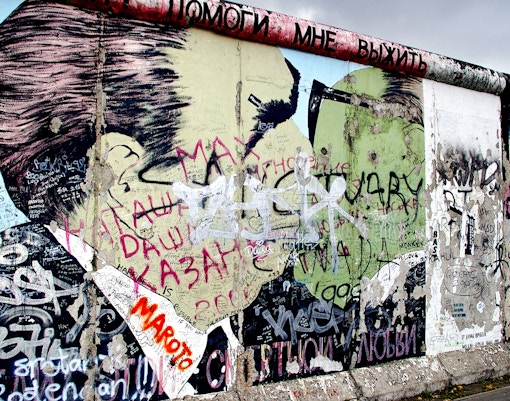
Historic significance
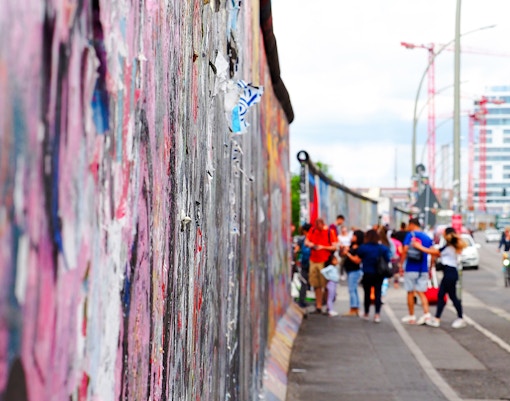
Cultural rebirth through art
By 1990, the East Side Gallery officially opened to the public, offering an international dialogue through art. The murals capture the raw political changes of 1989-1990 and are regularly restored to preserve their original impact. In 2018, the gallery was placed under the stewardship of the Stiftung Berliner Mauer (Berlin Wall Foundation), ensuring its preservation as a protected cultural monument.
Creative energy of Friedrichshain
The East Side gallery’s surrounding neighbourhood mirrors the spirit of the gallery itself. Friedrichshain is known for its edgy galleries, independent bookstores, canal-side bars, and cultural events. Across the Oberbaumbrücke, Kreuzberg offers flea markets, food trucks, and street performances. The locality thrives on contrast and creativity, much like the gallery that anchors it.
Accessibility and experiences
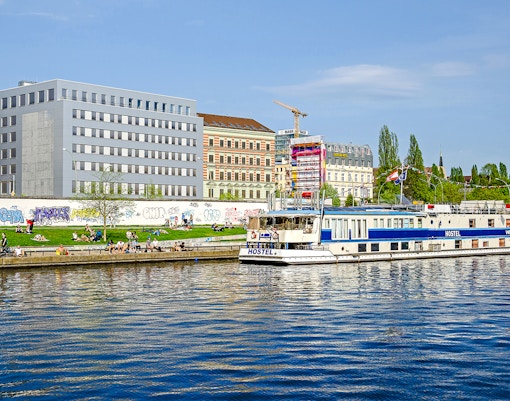
The East Side Gallery is open 24/7, free to visit, and fully wheelchair accessible. It’s also most often a starting point for a relaxing Berlin Wall boat cruise, where you’ll see history unfold from a peaceful waterside seat.
What can you see along the East Side gallery boat tour?
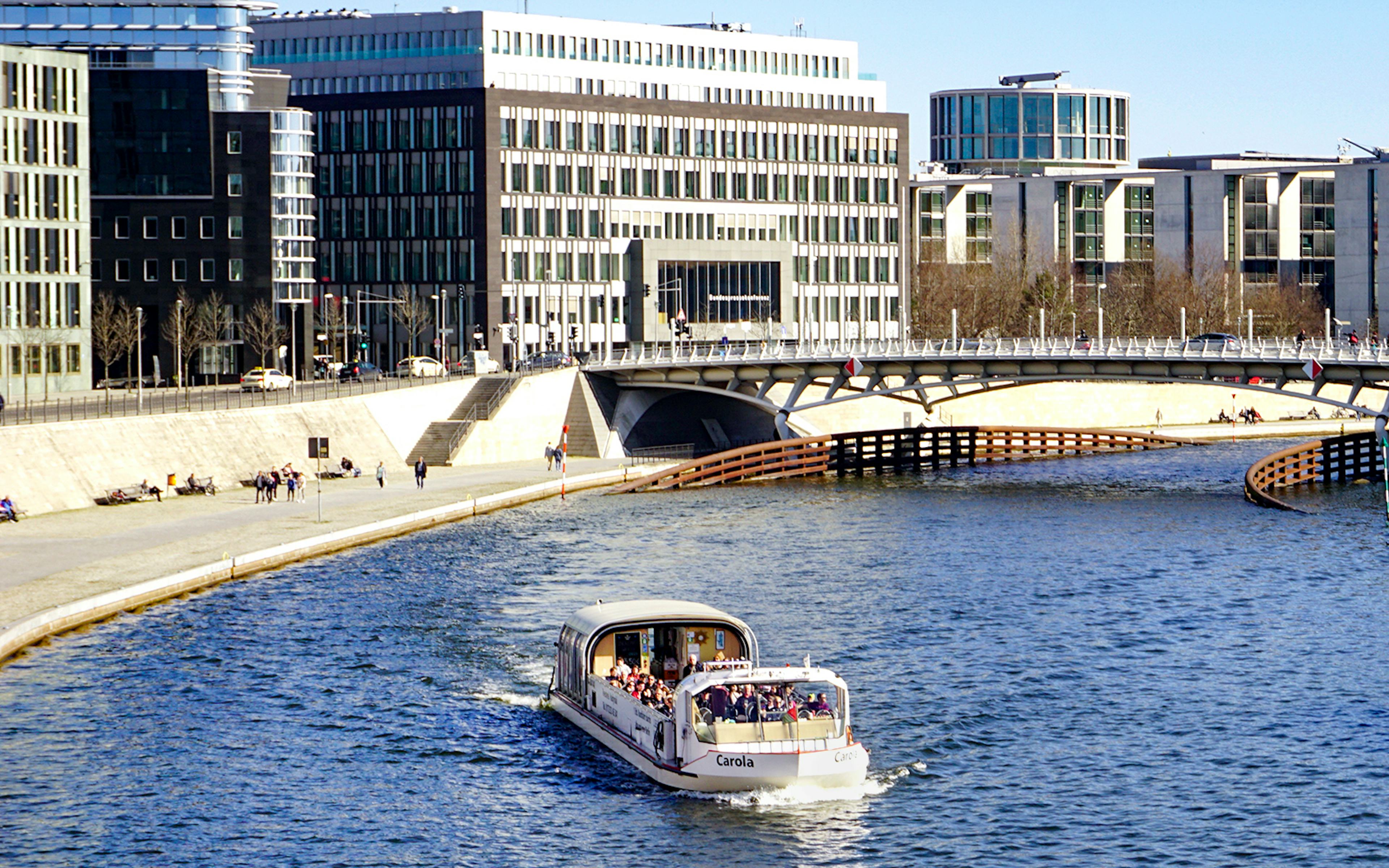
1/8
East Side gallery murals
Glide past world-famous artworks such as Dmitri Vrubel’s Fraternal Kiss and Birgit Kinder’s Trabant Breaking Through the Wall. These murals, along with dozens of others, trace Berlin’s psychological and political rebirth through bold brushstrokes and protest art.
Oberbaum bridge
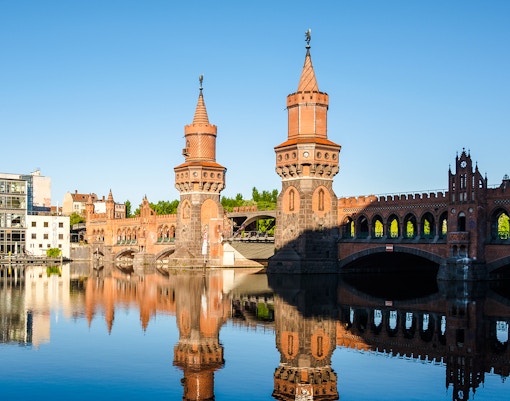
Once a military checkpoint, now a Gothic revival landmark, this dual-level bridge connects Friedrichshain and Kreuzberg. Its red brick towers and high arches are among Berlin’s most photogenic sites.
Mercedes-Benz arena
Standing on the former “death strip,” this modern concert venue reflects Berlin’s transformation. Its glass façade is a sharp contrast to the graffiti of the nearby Wall.
Molecule Man sculpture
Just downstream, three colossal aluminum figures stand mid-river, their perforated surfaces catching the light. Designed by Jonathan Borofsky, they represent unity between Berlin’s once-divided districts: Treptow, Kreuzberg, and Friedrichshain.
Former dock yards & warehouses
As you cruise, look out for repurposed 19th-century warehouses once used for cargo, now turned into hubs for art, music, and design. Many still feature original ironwork and graffiti walls.
Urban street life & Spree-side installations
Depending on the season, you may spot floating art exhibitions, docked party boats, open-air performances, and social art spaces spilling out onto the banks.
RAW Gelände (Friedrichshain)
RAW Gelände is a former railway yard in Friedrichshain, known for its vibrant cultural scene, including clubs, bars, art spaces, and a climbing hall. Just a short walk into this yard lies a world filled with street food trucks, beer gardens in old train sheds, climbing gyms, tattoo studios, and rotating art shows.
Treptower park (Alt-Treptow)
A bit further downriver, the Treptower park offers Soviet memorials, boat rentals, and riverside lawns perfect for picnics. It’s one of the few spots in Berlin where you can reflect on war, history, and nature in the same afternoon.
Plan your visit to Berlin’s East Side gallery
Most East Side Gallery boat tours depart from Anlegestelle Alte Börse (Old Stock Exchange Pier), located near Museum Island and Monbijoupark | Find on map
- By train:*
Take the S-Bahn (S3, S5, S7, or S9) to *Hackescher Markt Station**. From there, it’s a 2–3 minute walk past Monbijoupark toward the river. The pier is located behind the Alte Börse building, near the Bode Museum. - By bus:*
Bus lines *100 and 300 stop at Lustgarten or Spandauer Str./Marienkirche**. Walk through Museum Island and head west toward the pier at the rear of Alte Börse.
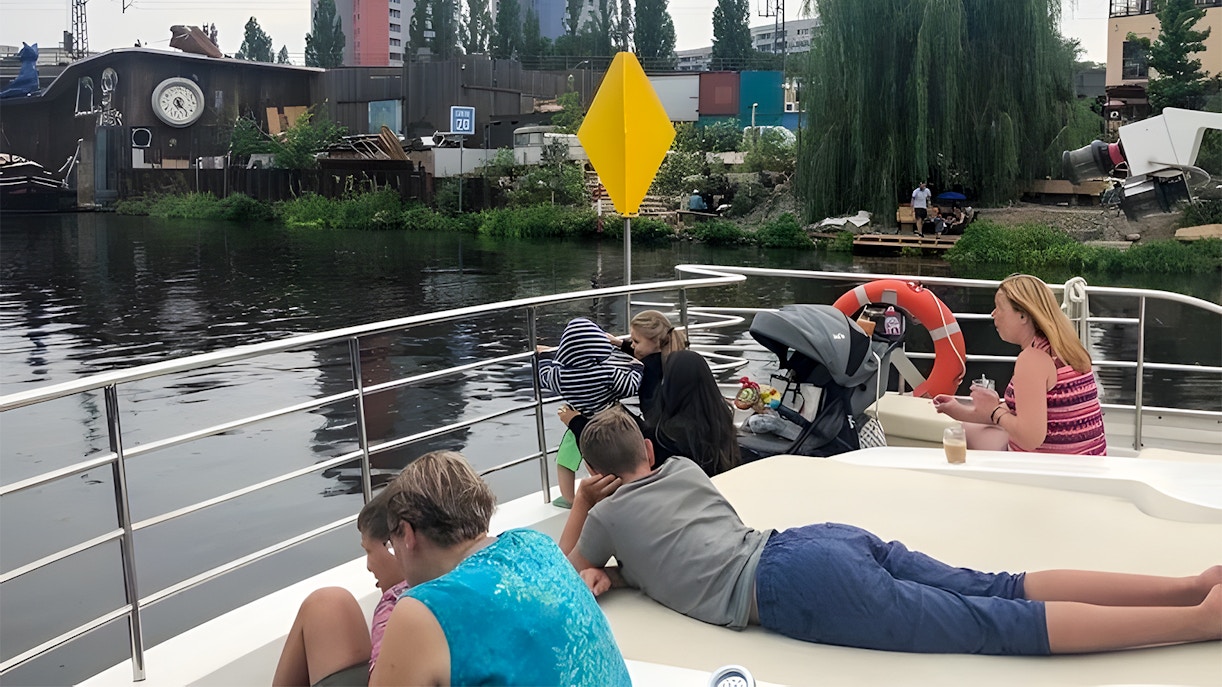
Weekday vs Weekend
- Weekdays: Especially mid-week mornings offer serene boats, fewer crowds, and calm riverbanks. This is the ideal time for thoughtful mural viewing, relaxed narration, and unobstructed photos.
- Weekends: Expect a livelier scene. Street musicians, gallery-goers, and riverside festivals often energize the route near the East Side Gallery. Boats fill up faster, but the festive atmosphere can enhance the experience.
Peak Season vs Low Season
- Peak Season (May–September): This is the busiest time of year, with tour boats often reaching full capacity, especially on weekends. Expect longer lines at boarding points and lively crowds along the East Side Gallery, Oberbaum Bridge, and nearby riverside cafés.
- Low Season (October–April): Cooler, quieter months bring smaller crowds and a more contemplative mood. Enclosed boats with heating offer cozy views of the murals, and the fading winter light highlights the textured surfaces of the wall.
Fun facts about the East Side gallery
- The East Side Gallery is the world’s longest open-air art gallery, featuring over 100 murals painted by 118 artists from 21 countries.
- A major restoration in 2009 saw 87 guest artists repaint 100 murals along the stretch.
- Some boat operators provide “mural commentary cruises” where narrators walk passengers through individual artworks, revealing political context and the artists’ intentions.
- The Trabant Breaking Through mural has been replicated in exhibitions worldwide, but viewing its original form on the Spree sets the mood for authenticity.
- The Oberbaum Bridge was once closed to civilian traffic—both road and river—and controlled by Soviet guards. Today, boats pass beneath its double-decker arches each tour.
Frequently asked questions about East side gallery Berlin tour
Most tours begin near the Oberbaum Bridge or Ostbahnhof and follow the Spree westward past the East Side Gallery, ending near Museum Island or Berlin Cathedral, depending on the cruise operator.
Typical cruises last 60-90 minutes, though extended routes combining central Berlin landmarks may extend a little longer.
Yes. The Spree runs directly alongside the wall’s river-facing side, offering unobstructed views of the murals, especially iconic ones like the Fraternal Kiss and Trabant Breakthrough.
Many do! Some boats offer live guides, while others provide audio guides in multiple languages. Specialized cruises feature detailed storytelling about the artists and the Berlin Wall’s history.
Yes. You can walk the entire 1.3 km stretch of murals for free 24/7. Many combine a boat ride with a walking tour of the gallery.
Some are, but not all. It’s best to cross check accessibility concerns while booking.
Late afternoon or early evening is ideal. The golden-hour reflections along the Spree create stunning views for photos.
Depending on the route, you may pass the Oberbaum Bridge, Molecule Man, Berlin TV Tower, and historic warehouses in Kreuzberg and Friedrichshain.
On select cruises, yes. Snack bars, beer, or wine may be available. Some evening tours offer drinks included in the ticket price, while others allow you to bring your own refreshments.
The original works remain, but periodic restoration ensures their preservation. Some panels have been repainted by original artists or carefully restored to match the 1990 versions.


